You’ve probably come across terminology like shared hosting, VPS hosting, and dedicated servers if you’ve been looking for web hosting choices. These may seem perplexing to novices. Many people begin with shared hosting, but as a website expands, it frequently need something more reliable. VPS hosting can help in this situation.
This post will explain what VPS hosting is, how it operates, its advantages, and when it makes sense to utilise it. I’ll make things straightforward and useful, like we’re just having a conversation.
What is VPS Hosting?
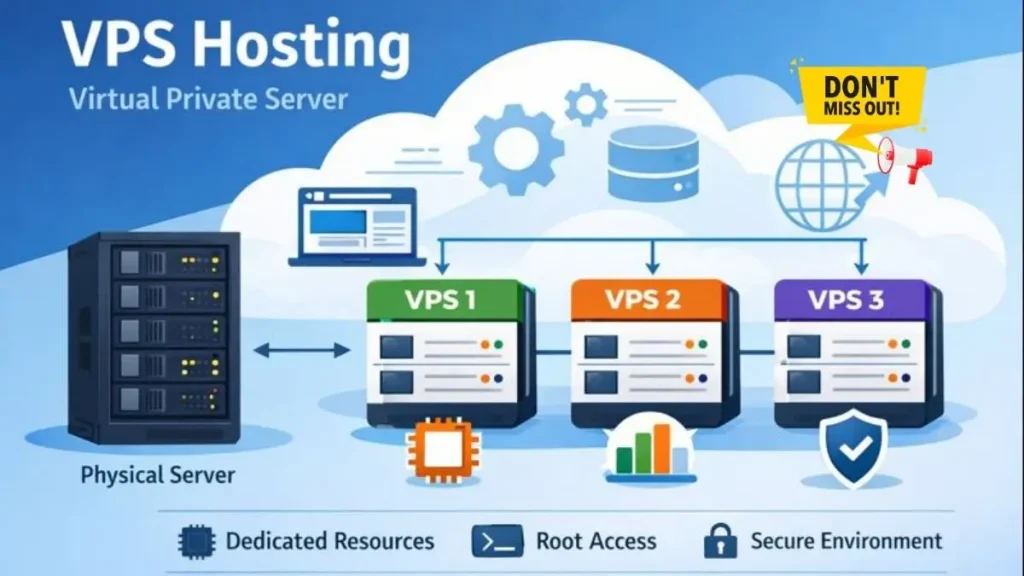
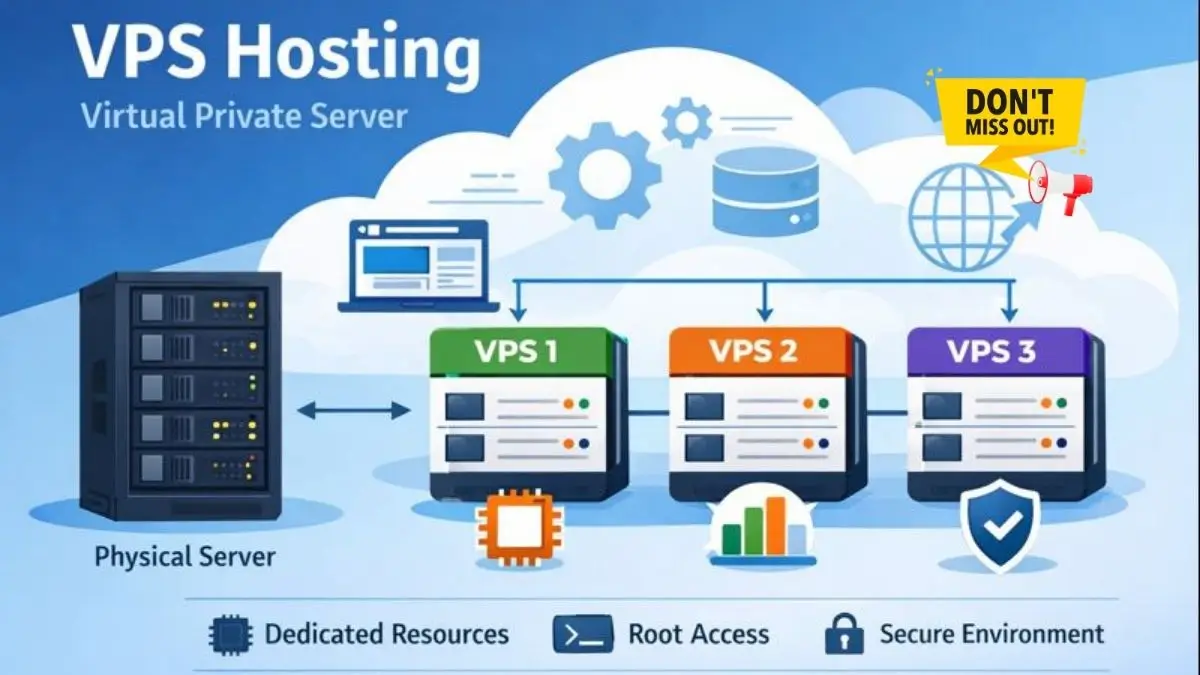
The term “VPS hosting” refers to virtual private server hosting. Simply said, it’s a sort of hosting in which a single physical server is divided into several virtual servers. Each virtual server runs separately and has its own resources.
Unlike shared hosting, which allows multiple websites to share the same server space and resources, a VPS server allocates a defined amount of CPU, RAM, storage, and bandwidth. This means that the actions of other users on the server have little effect on your website.
You can compare VPS hosting to living in an apartment block. Everyone lives in the same building, but everybody has their own flat, complete with secured doors, personal privacy and dedicated utilities.
How Does VPS Hosting Work?
VPS hosting uses virtualization technology. A powerful physical server is split into multiple virtual machines using special software called a hypervisor. Each virtual machine acts like a separate server with its own operating system.
Because of this setup, users get more control compared to shared hosting. You can install software, configure server settings, and even reboot your VPS server when needed. From a user’s point of view, it feels very similar to using a dedicated server, but at a lower cost.
VPS Hosting vs Shared Hosting
How VPS hosting differs from shared hosting is one of the most often asked questions.
Hundreds of websites share all resources and operate on the same server when shared hosting is used. Others may slow down if one site unexpectedly consumes more electricity. Additionally, you have some control over server configurations.
Resources are allotted to your account particularly when you use VPS hosting. Your website gains increased flexibility, stability, and performance. Because of this, VPS hosting is a good compromise between dedicated servers and shared hosting.
Benefits of VPS Hosting
Better Performance and Speed
One major benefit of VPS hosting is consistent performance. Since resources like RAM and CPU are reserved for your VPS server, your website loads faster and handles traffic more smoothly. This is especially helpful if your site has regular visitors or growing traffic.
Improved Security
VPS hosting offers better security than shared hosting. Each VPS is isolated from others, so problems on one account don’t easily spread to another. You can also set up custom security rules, firewalls, and monitoring tools to protect your data.
More Control and Customization
With VPS hosting, you usually get root or administrator access. This allows you to install applications, choose your operating system, and adjust server configurations. For developers and advanced users, this level of control is very useful.
Scalability
Another advantage is scalability. As your website grows, you can upgrade your VPS plan to get more resources. You don’t need to move your site to a completely new server. This makes VPS hosting a flexible option for long-term projects.
Cost-Effective Alternative to Dedicated Servers
Dedicated servers are powerful but expensive. VPS hosting provides many of the same features at a lower price. For many websites, a VPS server offers the right balance between performance and cost.
Uses of VPS Hosting
Hosting Growing Websites
VPS hosting is commonly used for websites that have outgrown shared hosting. Blogs, business websites, and content platforms often move to VPS hosting once traffic becomes steady.
Running Web Applications
Many web applications need specific server settings or software. VPS hosting allows developers to customize the environment to match their project’s requirements.
WordPress Hosting
While WordPress works on shared hosting, high-traffic WordPress sites often perform better on VPS hosting. It provides better speed, stability, and security for content-heavy sites.
Hosting Multiple Websites
With a VPS server, you can host multiple websites under one account. This is useful for freelancers, agencies, or anyone managing several projects.
Testing and Development Environments
Developers often use VPS hosting to create testing or staging environments. It’s a reliable way to test updates, applications, or configurations without affecting a live website.
Who Should Use VPS Hosting?
VPS hosting is a good choice if you want more control, better performance, and stronger security than shared hosting offers. It’s ideal for website owners who have some technical knowledge or are willing to learn basic server management.
If you’re running a small personal blog, shared hosting might be enough. But if your site is growing, handling regular traffic, or running custom applications, VPS hosting becomes a practical next step.
Final Thoughts
VPS hosting sits comfortably between shared hosting and dedicated servers. It offers better performance, more control, and improved security without the high cost of dedicated hardware. For many website owners, it’s a natural upgrade as their online presence grows.
If you’re serious about your website and want a hosting solution that can grow with you, VPS hosting is worth considering. It gives you room to expand while keeping things stable and manageable.
Frequently Asked Questions
1. What is VPS hosting in simple terms?
VPS hosting is a type of web hosting where a physical server is divided into smaller virtual servers. Each user gets their own private space with dedicated resources, which offers better performance than shared hosting.
2. Is VPS hosting better than shared hosting?
Yes, VPS hosting is usually better for growing websites. It provides more control, better speed, and improved security compared to shared hosting, where resources are shared among many users.
3. Do I need technical knowledge to use VPS hosting?
Basic technical knowledge is helpful, especially for unmanaged VPS hosting. However, many providers offer managed VPS plans where server setup and maintenance are handled for you.
4. Can I host multiple websites on one VPS server?
Yes, you can host multiple websites on a single VPS server. This makes VPS hosting a good option for developers, agencies, or users managing more than one project.
5. Is VPS hosting suitable for WordPress websites?
Yes, VPS hosting works well for WordPress websites, especially those with higher traffic. It offers better performance and flexibility compared to shared hosting.