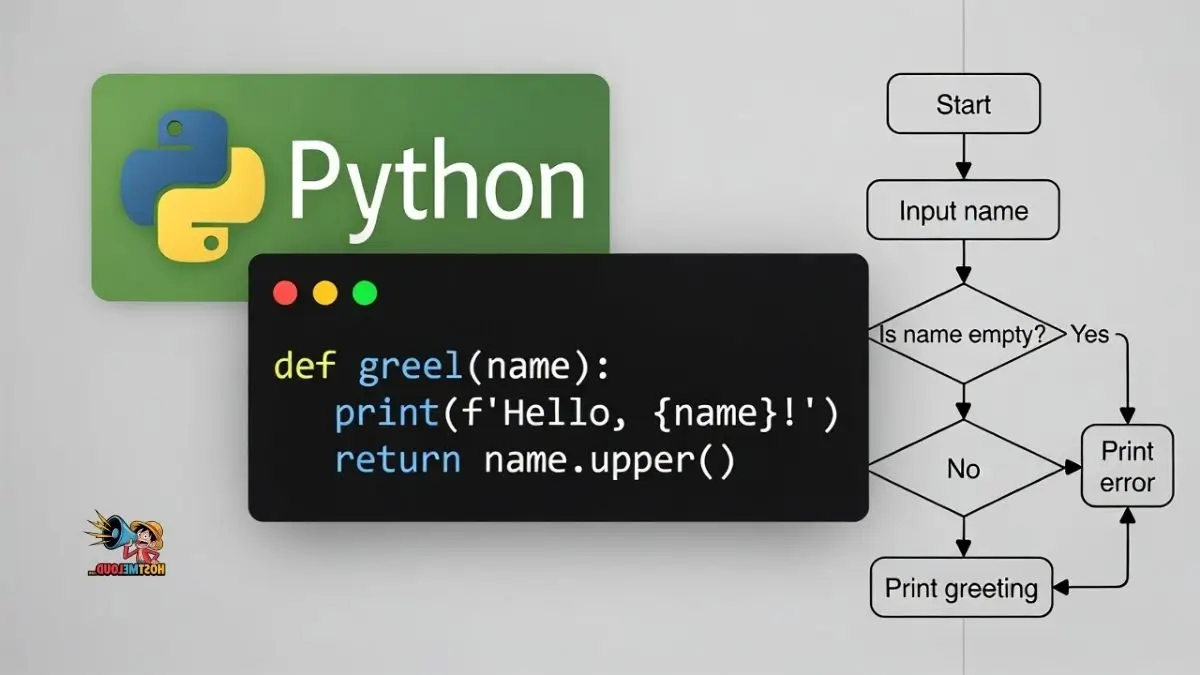
Python has become one of the most popular languages among developers worldwide, thanks to its use in everything from web applications to data analysis. Python remains a favorite in 2026, as technology evolves, because it is simple and powerful. Whether you’re just getting started or migrating from another language, there’s a lot to enjoy about how it handles jobs efficiently.
Key Highlights
- Python basics include simple syntax, variables, loops, and functions that make it approachable for newcomers.
- The language has 35 keywords in its latest versions, up from 33 in older ones like Python 3.7.
- CPython, the main implementation, is written in C, giving it speed and reliability.
- NumPy, a key library for data work, is mostly in C with some Python wrappers.
- You can learn Python basics in a week with focused effort, though mastery takes longer.
- Python isn’t based on C++ but shares some concepts; knowing C can help with understanding under-the-hood stuff.
What are Python’s 33 Words?
When people talk about the “33 words” in Python, they usually mean the keywords—the reserved terminology that cannot be used as variable names. There were exactly 33 in Python 3.7, but by Python 3.11 and later in 2026, that number has increased to 35 with additions like’match’ and ‘case’ for pattern matching. These keywords make up the foundation of Python’s structure. For example, ‘if’, ‘else’, ‘for’, and ‘while’ handle control flow, but ‘def’ defines functions. ‘True’, ‘False’, and ‘None’ are ubiquitous.
To see them all, you can run a bit of Python code: import the keyword module and print(keyword.kwlist). It’s a handy way to check without memorizing. If you’re coming from other languages, these might feel familiar, but Python keeps them minimal to avoid clutter.
What Are Python Basics?
Python basics are what get you up and running quickly. Start with variables—they’re like containers for data, assigned with a simple equals sign, no need to declare types upfront. Then there’s data types: integers, floats, strings, lists, tuples, and dictionaries for storing collections.
Control structures come next. If statements check conditions, loops like for and while repeat actions, and functions bundle code for reuse. Error handling with try-except blocks keeps things from crashing. It’s all designed to be readable, like plain English, which is why many pick it as their first language.
For those asking in other languages, like “പൈത്തൺ അടിസ്ഥാനകാര്യങ്ങൾ എന്തൊക്കെയാണ്?”—that’s Malayalam for Python basics—the answer is the same: focus on syntax that’s easy to grasp, with indentation mattering more than braces.
Is Python Written in C or C++?
The standard Python interpreter, known as CPython, is written in C. This option ensures portability across systems and efficient memory management. It is not in C++—though certain extensions may utilize it—but C serves as the foundation for speed in fundamental operations.
Why C? It enables Python to seamlessly connect with system libraries while keeping the runtime lightweight. If you look at the source on GitHub, you’ll notice a lot of C code managing things like object creation and trash collection.
Is NumPy Written in C or C++?
NumPy, the library that’s essential for numerical computing in Python, is primarily written in C, with some Fortran for legacy math routines. The Python parts are wrappers that make it user-friendly, but the heavy lifting—like array operations—happens in compiled C for performance.
This mix lets NumPy handle large datasets quickly, which is why it’s a staple in data science. If you’re using it for machine learning or stats, that C foundation ensures it doesn’t bog down.
Is C++ Built on C?
C++ isn’t exactly “built on” C in the way Python uses C for its interpreter. Instead, C++ evolved as a superset of C, meaning most C code runs in C++ with minor tweaks. It adds object-oriented features like classes and templates on top of C’s procedural style.
Bjarne Stroustrup designed it that way in the 1980s to extend C without breaking compatibility. So, while C++ compilers might handle C code, it’s more accurate to say C++ builds upon C’s syntax and concepts.
Are Python Modules Written in C?
Many standard Python modules are indeed written in C for efficiency. Take the math module—its core functions are in C to crunch numbers fast. Others, like datetime or json, have C implementations under the hood.
Not all, though; some are pure Python for simplicity. Third-party modules vary too—Pandas uses Python with C extensions via Cython. This hybrid approach keeps Python versatile: scriptable on top, speedy below.
Is Python a C++ programming language?
Python isn’t a C++ language. Guido van Rossum developed it in the early 1990s as a high-level scripting language. While it can call C++ programs via bindings such as Boost.Python’s syntax and philosophy, which emphasize readability and simplicity, are vastly different from C++’s complexity.
Python is interpreted (mostly), while C++ is compiled. They’re complementary: use Python for quick prototyping, C++ for performance-critical parts.
Can I Learn Python in 7 Days?
Sure, you can pick up Python basics in 7 days if you dedicate time each day. Day 1: Install Python and run “Hello, World.” Days 2-3: Variables, data types, and basic operations. Mid-week: Loops, conditionals, and functions. End with file handling and simple projects.
It’s not about fluency—that comes with practice—but getting comfortable enough to build small scripts. Resources like free online tutorials help speed things up.
Is Python Simple if You Know C?
If you are familiar with C, Python will feel more natural. You already understand variables, loops, and pointers. How do you manage memory? In Python, the garbage collector handles what you would malloc/free in C.
The focus has shifted to Python’s dynamic typing and object-oriented approach. It may take some time to adjust to indentation instead of braces, but your C knowledge provides a great foundation for understanding Python’s efficiencies.
Features of Python
Python stands out due to its features. It is interpreted, so you may view the results line by line rather than compiling them. Dynamic typing reduces boilerplate. Extensive libraries are available for web development (Django), data analysis (Pandas), and artificial intelligence.
It’s cross-platform, readable, and supports multiple paradigms: procedural, object-oriented, functional. Community support is huge, with forums and docs everywhere.
What is Python Used For?
Python is used for a wide range of tasks. Web development with frameworks like Flask. Data analysis and visualization. Automation scripts for sysadmins. Machine learning models. Even game dev with Pygame.
In 2026, it’s big in AI, cloud computing, and IoT. Companies like Google and Netflix rely on it for backend services.
Python Programming Examples
Let’s look at some Python programming examples. A simple loop: for i in range(5): print(i). Or a function: def add(a, b): return a + b.
For lists: my_list = [1, 2, 3]; print(sum(my_list)). These show how concise Python code can be.
Python Programming for Beginners PDF
If you’re starting, grab a Python programming for beginners PDF. Sites like Real Python or official docs offer free downloads with step-by-step guides, examples, and exercises.
They cover setup, basics, and projects—perfect for offline reading.
Python Online
Learning Python online is straightforward. Platforms like Codecademy, Coursera, or freeCodeCamp have interactive courses. YouTube channels break down topics too.
For practice, LeetCode or HackerRank let you solve problems in Python.
Python Programming Language Book
A good Python programming language book is “Python Crash Course” by Eric Matthes—hands-on with projects. For depth, “Fluent Python” explores advanced features.
Books complement online resources, offering structured learning.
Python Coding App
For mobile coding, try a Python coding app like PyDroid or QPython on Android. They include interpreters, editors, and libraries for on-the-go practice.
iOS options like Pythonista let you run scripts and build apps.
Python Code
Python code is all about clarity. Here’s a quick script to check if a number is even: num = int(input(“Enter a number: “)); if num % 2 == 0: print(“Even”); else: print(“Odd”).
It’s simple, yet powerful for building complex apps.
How to Get Started with Python: Step-by-Step
- Download Python from python.org—choose the latest stable version.
- Install it, and verify with ‘python –version’ in your terminal.
- Set up an editor like VS Code with Python extensions.
- Write your first script: print(“Hello, World!”) and run it.
- Explore tutorials on the official site or online platforms to build small projects.
FAQs
- What are the main features of Python? It’s readable, versatile, with a huge library ecosystem, and supports multiple programming styles.
- Can I learn Python without prior coding experience? Yes, its simple syntax makes it ideal for beginners.
- Is Python free to use? Absolutely, it’s open-source with no licensing costs.
- How does Python compare to C or C++? Python is higher-level and easier for rapid development, while C/C++ offer more control over hardware.
- Where can I find Python programming examples? Official docs, GitHub repos, and sites like GeeksforGeeks have plenty.
Finally, Python remains a solid choice for programmers of all skill levels in 2026. From its core terms and fundamentals to its use in cutting-edge industries, it strikes a balance between simplicity and capability. If you want to get started, start with the fundamentals and work your way up—you’ll understand why it’s so popular.